When we think about caring for someone with dementia, we often focus on memory loss, safety, medications and changes in behavior. But two of the most important parts of daily care — food and hydration — can be easy to overlook.
Eating and drinking may seem automatic, but dementia can gradually interfere with both. A person may forget to eat, lose the ability to recognize hunger or thirst, or have difficulty identifying the food in front of them. Changes in taste, smell, coordination and judgment may also make meals less appealing or more challenging.
These problems are not always obvious. A person may sit through a meal but eat very little. They may say they are not hungry even though they have not eaten for hours. A full glass of water may remain untouched because they do not recognize it, cannot easily reach it or simply forget that it is there.
Dehydration is particularly concerning for older adults. As we age, the sensation of thirst can become less reliable. Dementia may further reduce a person’s awareness that they need fluids or their ability to communicate that need.
Even mild dehydration can contribute to fatigue, dizziness, constipation, headaches and weakness. It may also worsen confusion and increase the risk of falls. A sudden change in alertness, behavior or mobility may sometimes be related to dehydration or inadequate nutrition rather than the progression of dementia itself.
Families and caregivers should watch for subtle warning signs. These may include unexplained weight loss, dry mouth, dark urine, constipation, increased sleepiness, weakness, greater confusion or a noticeable decline in energy. Clothing or jewelry becoming looser may be an early indication of weight loss.
Supporting good nutrition and hydration often requires more than simply placing food and water in front of someone. Meals should be calm, familiar and free from unnecessary distractions. Offering smaller portions can make the plate feel less overwhelming, and favorite foods may encourage a person to eat.
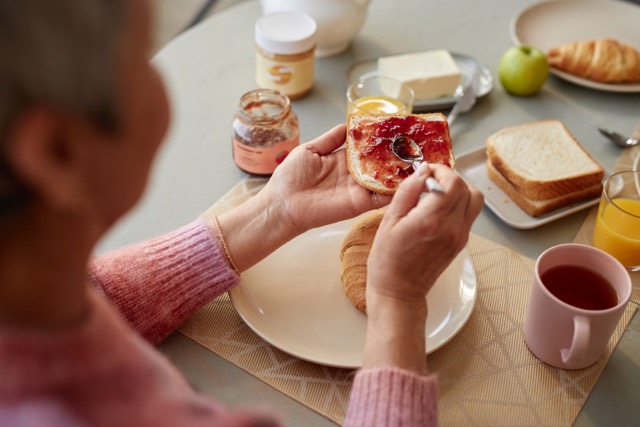
Presentation also matters. Colorful foods served on a plate that contrasts with the meal can make items easier to recognize. Finger foods may help someone who has difficulty using utensils, while softer foods may be easier for a person experiencing dental discomfort or swallowing problems.
Fluids should be offered regularly throughout the day instead of relying on the person to ask for a drink. Water is important, but hydration can also come from milk, smoothies, soup, herbal tea, fruit, and other foods with a high-water content. Some people respond better when a drink is offered directly with a simple prompt rather than being asked whether they are thirsty.
Whenever possible, meals should remain social and enjoyable. Sitting and eating with someone can provide helpful cues and make the experience feel more natural. Familiar music, favorite dishes, and a consistent routine can create comfort and encourage participation.
It is also important to look for medical causes when eating or drinking changes suddenly. Dental pain, medication side effects, constipation, depression, swallowing difficulties, and infections can all affect appetite or fluid intake. Significant or persistent changes should be discussed with the person’s healthcare provider.
Food is more than nutrition. Meals can provide structure, comfort, connection, and pleasure — even when memory is fading. Preserving those experiences, while making thoughtful adjustments to meet a person’s changing needs, can have a meaningful impact on health, dignity and quality of life.