FROM OUR BLOG
Residential assisted living staffing ‘relationship-driven, less task-oriented’
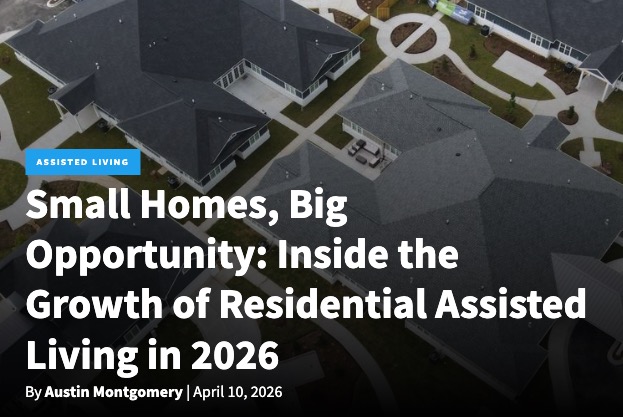
Dr. Raj Kalra recently contributed his expertise to a Senior Housing News article examining the growth of residential assisted living and the increasing demand for smaller, more personalized care environments.
“Staffing is more relationship-driven and less task-oriented,” said MD Senior Wellness co-founder Raj Kalra, who recently opened a memory care community within a 55+ neighborhood in Santa Rosa, California, known as Aroha Memory Care.
It requires a “higher level of versatility” from staff, needing employees to be “comfortable with both caregiving and contributing to the overall home environment,” Kalra said. That makes training and developing culture within a property “critical.” This consistency has helped Aroha residents who came to the property from larger senior living settings and were previously withdrawn thrive in a more intimate environment.
“We’ve seen meaningful improvements across multiple areas, including reduced medication use, fewer falls, increased engagement, improved mood, and greater alertness,” Kalra added.
Staff are providing care, but also create the “daily rhythm of the home,” focusing on engagement and communication with families,” Bongiovanni said. This makes staffing within residential assisted living homes “a more holistic role.”
“Roles are often segmented and specialized,” Bongiovanni added.
Wellpointe relies on a “holistic caregiver model” in contrast to the departmental staffing approach larger senior living communities use, with a minimum staffing ratio of one staffer for six residents. The operator flexes that ratio as high as 3 staff to 6 residents depending on care needs, Kutnerian said. Residents have thrived in these higher-touch settings.
For example, at a Wellpointe community, a new resident who arrived feeling resentful and resistant to leaving her longtime home experienced a profound change after forming an immediate connection with a fellow resident. To Kutnerian, this illustrates how a more intimate setting provides unique opportunities for residents to find new purpose and thrive.
Caregivers in residential settings are “household anchors” and Harmony Homes relies on staff-to-resident ratios between 1:4 and 1:8, with the provider seeking out employees that are able to connect emotionally with residents, according to DeClue.
By relying on multiple communities near one another, The Sage Oak aims to find a “Goldilocks principle,” between engagement and care with having 30 to 60 residents nearby to create scale and build engagement between properties, Hornbuckle noted. This range helps to maintain the intimacy of and home-like feel these properties market to prospective residents. In his view, a house with only a few residents can be too small for socialization and services, while a 200‑bed community is too large and impersonal, so tightly grouped small homes hit the “just right” mix.
Read the full article @ “Small Homes, Big Opportunity: Inside the Growth of Residential Assisted Living in 2026.”